

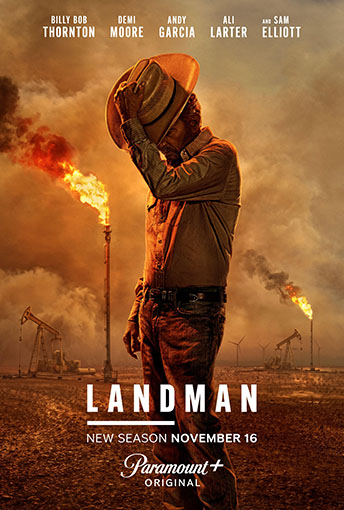
Landman doesn’t reset or reinvent itself in its second chapter — and that’s exactly what makes it work. Season 2 continues seamlessly from where the first season left off, doubling down on its gritty realism, morally complex characters, and the volatile world of the West Texas oil industry.
Created by Taylor Sheridan, Landman remains grounded in the harsh realities of power, money, and survival. Season 1 laid the foundation: a world where oil isn’t just a resource, but a weapon — shaping politics, livelihoods, and personal relationships. Season 2 doesn’t slow things down; instead, it sharpens the stakes.
At the center of the series is Tommy Norris, portrayed with raw authority by Billy Bob Thornton. In Season 2, Tommy is no longer just reacting to chaos — he’s actively navigating it. The consequences of decisions made in Season 1 ripple outward, forcing him to balance corporate pressure, personal loyalty, and the increasingly dangerous realities on the ground. Thornton’s performance remains the show’s anchor: restrained, weathered, and deeply human.
What makes Season 2 particularly compelling is how it respects the audience’s investment. Characters evolve naturally rather than being reintroduced or simplified. Conflicts escalate instead of being replaced. Relationships — strained, broken, or transactional — carry emotional weight because they feel earned. This continuity gives the series a lived-in authenticity that’s often missing from modern television dramas.
Visually, Landman stays true to its identity. The wide, unforgiving landscapes of West Texas remain central to the storytelling. Oil fields stretch endlessly under harsh skies, serving as a constant reminder of both opportunity and destruction. The environment itself feels like a silent character — indifferent, imposing, and unforgiving.
Season 2 also expands the show’s thematic scope. While Season 1 focused heavily on survival within the system, the new episodes dig deeper into control, accountability, and the long-term cost of unchecked ambition. Power dynamics shift, alliances are tested, and the line between necessity and greed becomes even more blurred.
Perhaps most importantly, Landman Season 2 avoids spectacle for spectacle’s sake. Its tension comes from dialogue, decisions, and consequences rather than explosive set pieces. That restraint reinforces the show’s realism and keeps it emotionally grounded.
For viewers who connected with Season 1, the second part feels less like a sequel and more like a continuation of a long, dangerous day — one that isn’t over yet. If the series maintains this trajectory, Landman is positioning itself as one of the most consistent and confident modern American dramas on television.