

Few filmmakers shape emotion through place as powerfully as Steven Spielberg. In his most recent films, Spielberg has moved away from spectacle-driven cinema and returned to something more intimate: memory, history, and the spaces where private lives collide with public events. His last five movies reveal a director reflecting on identity, responsibility, and the meaning of home.
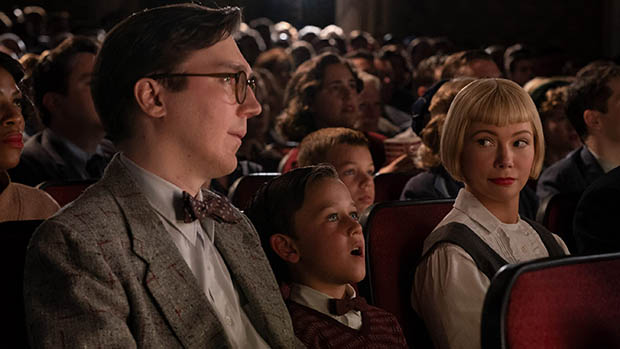
The Fabelmans (2022)
Spielberg’s most personal film to date, The Fabelmans is a semi-autobiographical coming-of-age story set in post-war America. The film travels through suburban New Jersey, Arizona, and California, using domestic interiors, school corridors, and desert landscapes to mirror the emotional journey of a young filmmaker discovering both the magic of cinema and the fractures within his family. The locations feel lived-in and quietly nostalgic, turning ordinary spaces into emotional landmarks.
West Side Story (2021)
In West Side Story, Spielberg reimagines the classic musical within the streets of 1950s New York City. Shot largely on constructed urban sets inspired by Manhattan’s West Side, the film emphasizes cramped neighborhoods and looming construction zones, reinforcing themes of displacement and social tension. The city itself becomes a character—alive, restless, and divided—mirroring the cultural conflict at the heart of the story.
Ready Player One (2018)
A sharp contrast to his later reflective work, Ready Player One leaps between a dystopian Columbus, Ohio, and the limitless digital universe of the OASIS. Here, Spielberg blends real-world decay with hyper-stylized virtual worlds. The physical settings feel compressed and harsh, while the digital spaces explode with color and movement, underscoring the film’s central question: where do people truly belong—in reality or escape?
The Post (2017)
Set in Washington, D.C., The Post unfolds largely inside newsrooms, courtrooms, and government offices. Spielberg uses tight interiors and muted tones to heighten tension, reflecting the pressure faced by journalists confronting political power. The city’s institutional architecture reinforces the film’s focus on accountability, truth, and moral courage.
Bridge of Spies (2015)
Cold, restrained, and atmospheric, Bridge of Spies moves between New York, Berlin, and the famous Glienicke Bridge during the Cold War. Snow-covered streets and stark urban landscapes emphasize isolation and ideological division. The bridge itself becomes a powerful symbol—neutral ground suspended between two worlds.
Why These Films Matter
Together, Spielberg’s last five films trace a journey from public history to private memory. Whether revisiting childhood, rebuilding iconic cities, or examining moments of moral consequence, Spielberg uses place not just as a backdrop—but as a storyteller in its own right.
Latest Spielberg-Linked Film: Hamnet (2025)
Hamnet isn’t directed by Spielberg himself, but he is one of the producers of this critically acclaimed drama — and the film is currently among the major awards contenders of the year.
The movie is directed by Chloé Zhao and is based on the 2020 novel by Maggie O’Farrell. It premiered in theaters in late 2025 and has generated widespread critical praise, with strong audience reception and early awards buzz.
Story and Setting
Hamnet centers on the family life of William Shakespeare and his wife Agnes (Anne Hathaway) during a deeply tragic period: the death of their 11-year-old son, Hamnet, likely from the plague in 16th-century England. The film explores how this loss affected their lives and, in its own narrative frame, the emotional origins of Shakespeare’s later masterpiece Hamlet.
Rather than being a straightforward biographical film about Shakespeare’s legendary playwriting career, Hamnet uses historical and emotional drama to dig into the meaning of grief, family bonds and artistic inspiration — all set in pastoral landscapes and Tudor-era England, contrasting with the more familiar Elsinore castle imagery associated with Hamlet.
Lead performances come from Paul Mescal as William Shakespeare and Jessie Buckley as Agnes, bringing depth and human vulnerability to the period drama.